
“Sustainability must be accessible. Accessibility needs to be ensured through three main pillars. First, we need to make sure we have as broad a range as possible of products and services that support the energy transition and sustainability.
I’m referring to systems that allow us to produce our own electricity, photovoltaic systems with storage, and equipment that helps us use energy more efficiently when we consume it.
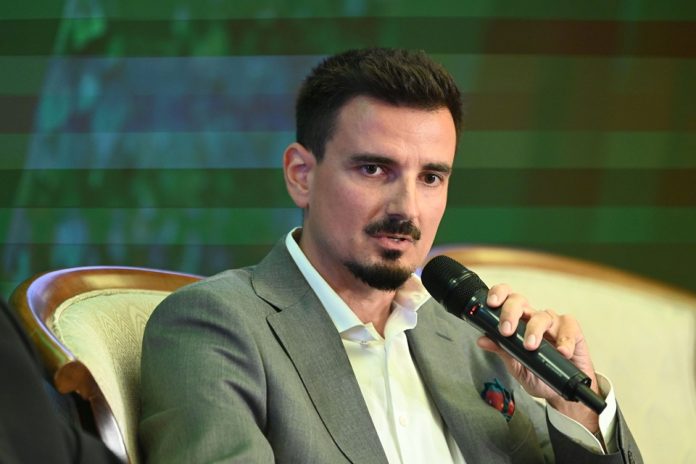
The second pillar is the financial one. With money, everyone can be sustainable. But we’ve tried to find solutions for those moments when funds are not readily available, by offering the possibility of providing these types of equipment as services included in the electricity bill,” said Andrei Ștefănescu, Deputy General Director, E.ON Energie Romania, during the Sustainability in Business Forum organized by The Diplomat-Bucharest and Sustainability Today.
Key statements:
- “The third pillar is education and information. It is very important for people to understand that no step is too small when it comes to sustainability. It is equally important to understand that sustainability is not only about producing your own electricity, but also about consuming more rationally and making net positive choices.
- “So far, we’ve reached 110,000 households with our energy efficiency solutions. If we look specifically at electricity generation through photovoltaic systems, interest has grown exponentially in recent years. Since the beginning of this year, we’ve been installing an average of nearly 20 photovoltaic systems per day.
- “Beyond the residential segment, in the B2B area, last month we inaugurated our 400th photovoltaic power plant. These are facilities focused on self-consumption, helping customers become as energy self-sufficient as possible.”
- “There are more and more energy solutions that allow us to ensure or even improve our comfort without harming the environment — in fact, by protecting it. The heat pump is one of these solutions. The only major challenge at this point is the high cost. That’s why we’re also looking at more financially accessible innovative technologies.”
- “From an operational perspective, we’re facing several challenges. In Europe, whether we like it or not, we rely heavily on equipment imported from China, which is not a problem until the supply chain becomes an issue. This is one of the challenges we’re addressing by diversifying our portfolio of companies and technologies as much as possible.”
- “The second major challenge is workforce — specifically, technical experts in the field. There is a shortage of skilled labor, and we’re trying to address it by collaborating with as many contractors as possible to fill these gaps.”
- “The strategic layer of challenges concerns policies and the regulatory framework. For sustainability to truly be sustainable, there must be a legal framework and initiatives that support this transition and the adoption of new technologies. We need coherent energy policies — from large industrial producers to residential consumers — and targeted support where relevant. One example is the subsidization of heat pumps or other efficient systems.”