

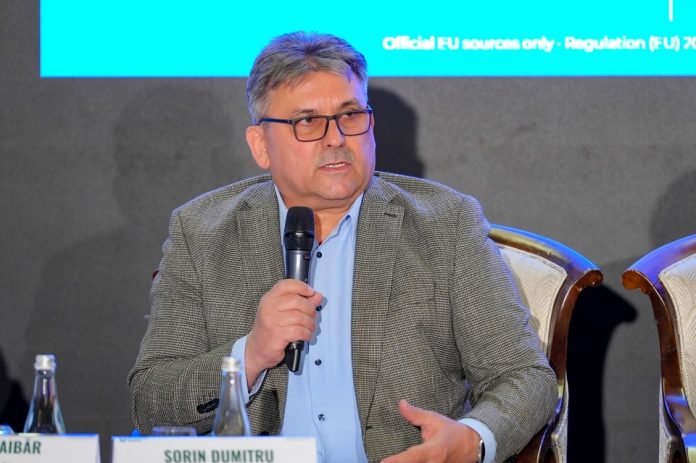
The transition from a directive-based approach to a directly applicable regulation marks a major paradigm shift in European packaging legislation, Sorin Dumitru, Public Affairs and Sustainability Manager at Professional Recycle said during Circular Economy Conference organized by The Diplomat-Bucharest and Sustainability Today.
“We have closely followed for several years the moment this major legislative shift was announced—the move from implementing a directive to implementing a regulation. We were used to working with the Packaging Directive. Every 3–4 years, the European Commission would review it and introduce targeted amendments following broad public consultations. These changes were incremental and easier to absorb and transpose into national legislation,” he explained.
Key statements:
• “We had the flexibility—and I would even call it the luxury—of transposing European legislation in a somewhat original way. We were not required to implement word-for-word. The PPWR, the Packaging and Packaging Waste Regulation, comes with everything new. It largely resets what we knew from the directive and establishes a completely new legislative framework.”
• “The new PPWR introduces a very precise, extensive, and diverse set of rules—all at once. However, it will not be implemented overnight. There will be milestones, depending on how the European Commission develops the secondary legislation.”
• “Because without this secondary legislation, the regulation cannot truly be implemented. When we talk about secondary legislation, we are primarily referring to Delegated Acts, which supplement or amend non-essential elements of the main legislative act. For example, they may add or revise certain technical standards included in the regulation’s annexes.”
• “These acts are under the control of the European Parliament and the Council, meaning there is an interinstitutional verification mechanism at EU level, and they have general applicability.”
• “Another category of secondary legislation establishes uniform criteria—essentially identical implementation rules across all Member States—to support harmonization. These are under the control of the European Commission, which in turn is subject to oversight by Member States through the comitology procedure.”
• “These acts generally have broad applicability, but they may also have individual applicability. I mention this because a few legislative acts are coming our way, and we will need to understand and implement them. Frankly, I still question whether, while the regulation itself applies directly, these delegated or implementing acts might also require transposition or adaptation into national law.”
• “In other Member States, some implementing decisions have already been transposed through government decisions, ministerial orders, and similar instruments. So, we may also need a national implementation timeline for these acts.”
• “We are facing a wave of delegated and implementing acts under this secondary legislation. We have guidance to understand proposals for simplification from the European Commission—but they remain proposals. Most importantly, we must start considering how to adapt national legislation to these new requirements so that the regulation becomes functional, implementable, and operational.”
• “PPWR represents an opportunity to reset both legislation and the packaging waste management system on solid, sustainable foundations—ones that can allow predictability and help us meet future targets.”