

More
    HomeTOPICSCircular EconomyRomania’s Deposit Return System reaches 10 billion beverage containers collected since launch...

    Romania’s Deposit Return System reaches 10 billion beverage containers collected since launch cementing its place among Europe’s fastest-growing

    Published on

    Romania’s Deposit Return System (DRS) has crossed a landmark milestone: 10 billion beverage containers collected since its launch, an achievement that firmly establishes it as one of Europe’s fastest-growing.

    Since its launch in November 2023, Romania’s DRS, managed by RetuRO, has delivered consistent and robust performance. Collection rates rose steadily during the first year, reaching 83% in 2025, its second full year of operation.

    The latest numbers confirm the system’s strong momentum and growing public engagement. In the first four months of 2026, Romanians returned almost 1.5 billion beverage containers, with the return rate reaching 85%.

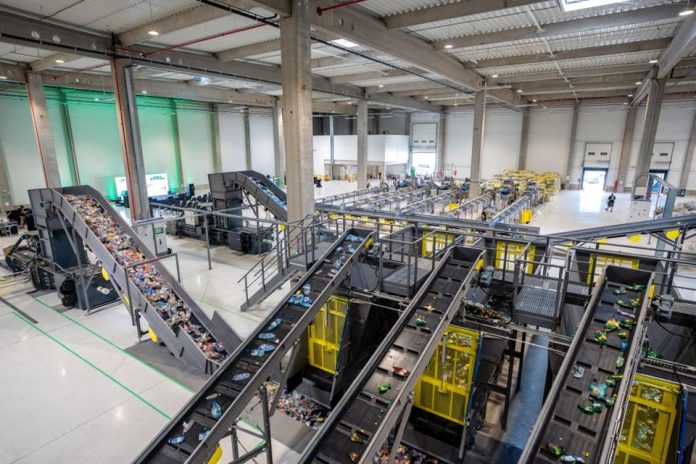
    Since its launch, RetuRO has delivered around 740,000 tonnes of high-quality PET, aluminium and glass to domestic recyclers, feeding directly into Romania’s industrial recycling chain and reducing dependence on imported secondary raw materials.

    Looking ahead, the focus is on strategic growth: expanding collection infrastructure to ensure equitable access for all consumers, enhancing system efficiency, and integrating new functionalities.

    Thus, Romania’s DRS has become a European benchmark for implementing circular economy principles at scale, both in terms of scope and the speed at which it has delivered measurable impact. For the first time, a single integrated system has successfully aligned government, producers, retailers, and consumers within a collaborative framework, turning sustainability from a policy commitment into an operational reality embedded in the everyday lives of millions.

    Most importantly, Romania’s DRS is reshaping how the country maximizes the potential of valuable resources resulting from the collected material. In doing so, it is consolidating a resource-efficient economy, one where the value of materials is captured domestically, rather than lost to landfill.

    spot_img

    Latest articles

    Deloitte study: World economy loses more than 25 trillion euros annually, almost a third of the global GDP, due to inefficient use of resources

    The world economy loses around 25.4 trillion euros in value annually, equivalent to almost...

    Saint-Gobain Foundation and Habitat for Humanity Romania support the flood-affected community in Broșteni

    The Saint-Gobain Foundation, alongside Habitat for Humanity Romania, has contributed to the recovery of...

    NNDKP advised the Saica Group on the acquisition of Thimm Group

    Nestor Nestor Diculescu Kingston Petersen (NNDKP) was part of the international legal team advising...

    RetuRO: Over 10 billion packaging units collected since the launch of Romania’s Deposit Return System

    RetuRO, the administrator of Romania’s Deposit Return System (DRS) and the country’s largest circular...

    More like this

    Deloitte study: World economy loses more than 25 trillion euros annually, almost a third of the global GDP, due to inefficient use of resources

    The world economy loses around 25.4 trillion euros in value annually, equivalent to almost...

    Saint-Gobain Foundation and Habitat for Humanity Romania support the flood-affected community in Broșteni

    The Saint-Gobain Foundation, alongside Habitat for Humanity Romania, has contributed to the recovery of...

    NNDKP advised the Saica Group on the acquisition of Thimm Group

    Nestor Nestor Diculescu Kingston Petersen (NNDKP) was part of the international legal team advising...