

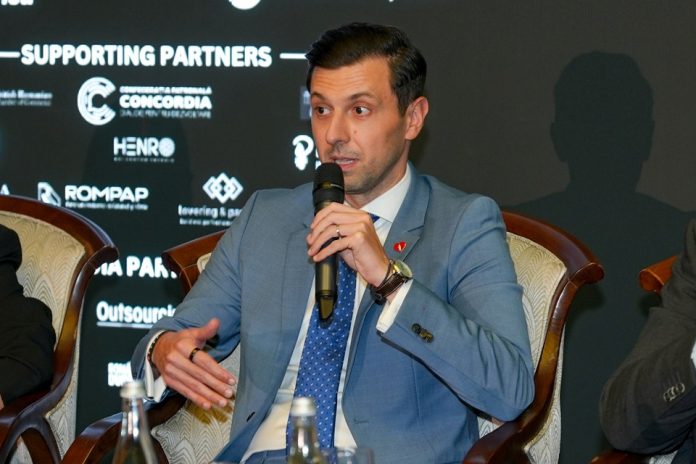
Companies have varying levels of expertise when it comes to measuring their carbon footprint and assessing environmental impacts across the value chain, making collaboration with suppliers essential to improving sustainability reporting, Cristian Moldovan, Corporate Affairs and Sustainability Director at Coca-Cola HBC Romania, said during the Sustainability in Business Forum, organised by Sustainability Today and The Diplomat-Bucharest.
“Some companies see sustainability investments and sustainability reporting—which ultimately also shows the return on investment—as something that adds value to the business. Others do it simply because they are required to report,” Moldovan said.
He noted that while some business partners have well-developed carbon footprint calculation capabilities, others still lack the necessary expertise, meaning that much of the data they provide is based on estimates.
“Some of our partners know very well how to calculate their carbon footprint, but others, including some of our suppliers, do not have the knowledge to do so. As a result, a significant share of the reports we receive from them is based on estimates,” he explained.
Moldovan also highlighted the role of the European regulatory framework in improving reporting practices, expressing support for greater harmonisation of requirements across the European Union.
“I am personally pleased that the European Union is increasingly moving towards legislation through regulations rather than directives, providing a common framework across Europe,” he said.
In his view, a more harmonised framework could make sustainability reporting easier for smaller companies with limited resources, helping them comply with regulatory requirements while providing more consistent data to their business partners.
Such improvements would also benefit companies that rely on supplier data to assess their overall environmental footprint and meet their own reporting obligations.
Moldovan emphasised the importance of supporting local businesses, given their significant share among the company’s suppliers in Romania.
“More than 85% of the suppliers we work with in Romania are local,” he said, underlining the opportunity to strengthen collaboration and knowledge-sharing across the supply chain.
He called for initiatives that would bring companies together to exchange experience and help suppliers understand and comply with sustainability legislation without placing an excessive administrative burden on their operations.
“I believe it would help us considerably if we could establish frameworks where we can sit down together, discuss and share our experience, and help suppliers comply with legislation without requiring a substantial effort from them. This would allow them to focus on what they do best—their own businesses,” Moldovan said.
He added that closer cooperation could improve the quality and consistency of sustainability data collected throughout the value chain, ultimately supporting national reporting obligations.
“Ultimately, we need to work together to provide data that the Government can subsequently submit to the European Commission wherever reporting is required,” he concluded.