

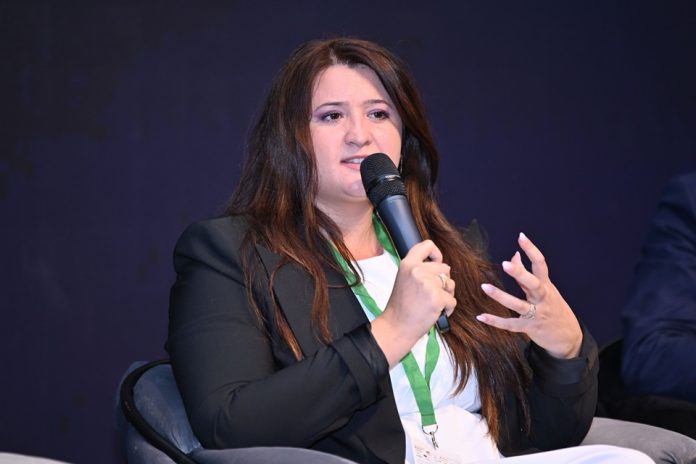
“For several years, we have had an environmental strategy with clear objectives regarding climate and circular economy. In the governance area, our current priority is automation and, essentially, making processes more efficient at company level.
As part of this efficiency process, we are looking at all the non-financial performance indicators we have and, specifically, we are currently implementing various types of tools, including disruptive technologies, to automate certain business processes. Whether we are talking about tools for waste management, or disruptive technologies in combating food waste in fruits and vegetables,” said Corina Dospinoiu-Imre, Sustainability Director, Auchan Retail Romania, during the Sustainability in Business Forum organized by The Diplomat-Bucharest and Sustainability-Today.
Key statements:
• Our objective is essentially to reduce food waste, but at the same time to optimize and streamline in-store activities. This is one of the practical examples we are implementing at store level. When we talk about food waste, we address the topic 360 degrees. That means working on prevention — what we can do to optimize the product assortment, to optimize orders and commercial commitments, what we do operationally in stores, and then how we handle the food waste that remains. In this area, we have a biogas production project. So, we transform waste into a new energy resource, and partnership, of course, is a key word in everything we do in the field of sustainability.
• How do we concretely integrate sustainability into the business? Our objective for this year is to generate over 7% of EBITDA through sustainability. So, we are fully integrated into the business side through various projects and we closely monitor what happens, obviously, also from a supply chain perspective.
• We aim to reduce Scope 3 emissions by 25% by 2030 compared to 2020. There are many levers we can activate together with our partners and suppliers in order to, first of all, increase the climate resilience of Romanian agriculture, ensure a more economically sustainable business environment for Romanian suppliers, and ultimately, this sustainability must translate into consumers’ pockets.
• This means that all the actions we take together with our partners must translate into the shelf price, which must be very competitive for the consumer. All the optimization and efficiency measures we take along the supply chain must ultimately have a positive impact for customers.
• What we have already been doing for the past 3 years is linking individual performance indicators to sustainability criteria. Every role — whether you’re a fruits and vegetables manager, a maintenance manager, or a beverage buyer — has a sustainability criterion integrated into your individual compensation, specific to your job. This yields the best results because at the end of the year, people want to receive their performance bonus.