

ABB has signed a Memorandum of Understanding (MoU) with Swedish textile impact company Syre to jointly explore technologies to support the development of Syre’s first textile-to-textile recycling plant in Vietnam.
The agreement establishes a framework for collaboration to investigate how ABB’s automation, electrification and digital technologies could contribute to safe, efficient and scalable operations. It will also explore how these capabilities could further optimize process and quality control performance as Syre advances its ambition to produce circular polyester at industrial scale.
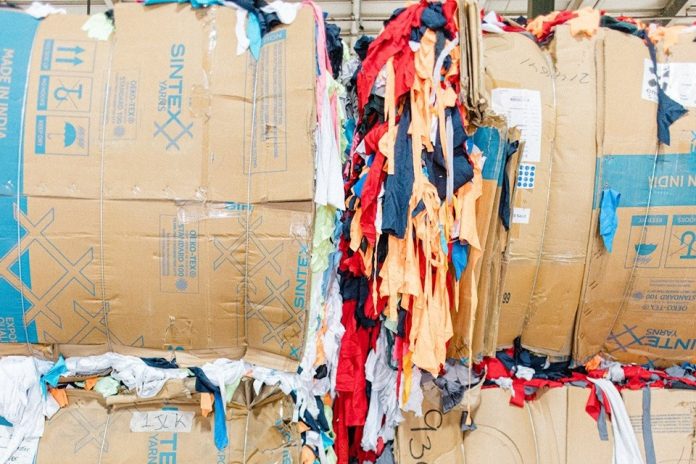
The proposed plant in Gia Lai province, Vietnam, is intended to recycle polyester from used textiles and industrial waste into new recycled polyester material. Polyester is one of the world’s most widely used fibers and is traditionally produced from fossil-based sources. Recycling polyester helps reduce reliance on virgin fossil inputs, lowers climate impact and keeps valuable materials in circulation, supporting the transition toward a more circular textile industry.
Under the MoU, ABB and Syre will assess how ABB’s technologies – including its distributed control systems, digital industrial software and electrification portfolio – could be adapted to meet the specific requirements of polyester textile-to-textile recycling. Activities are expected to run in parallel with the detailed engineering phase of Syre’s first plant.
“This agreement reflects ABB’s role in supporting emerging industrial applications where automation and electrification can enable greater resource efficiency,” said Wilson Monteiro, Global Business Line Manager for Pulp, Paper and Fiber, in ABB’s Process Industries division. “Together with Syre, we will explore how our experience in fiber processing, chemicals and advanced process industries can be applied to polyester recycling. We’re excited to discover what’s possible as we embark on this new technological collaboration.”