

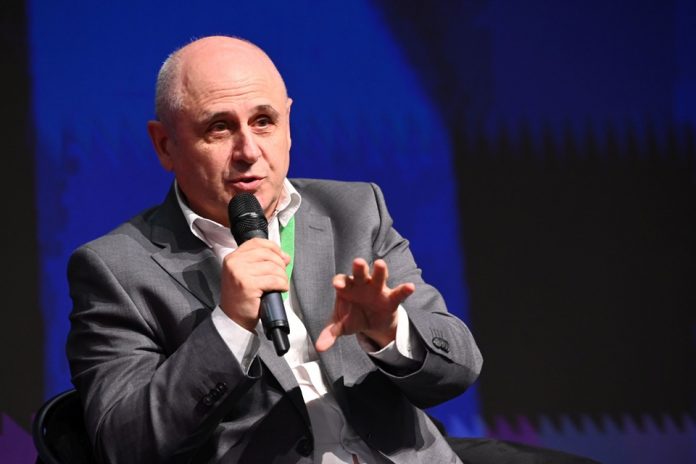
Making construction and demolition waste recycling economically viable requires effective regulation, appropriate financial incentives and greater cooperation with countries that have already made progress in the circular economy, according to Constantin Damov, President of the Circular Economy Coalition.
“You cannot buy at a high price, sell at a low price and expect to make a living from the difference. No business can grow while operating at a loss,” Damov said at the Circular Constructions conference, organised by the Circular Economy Coalition, stressing that recycling initiatives must be supported by viable business plans and clear prospects for profitability. Otherwise, he warned, businesses risk turning their own activities into waste.
Damov argued that the environmental and social costs of waste disposal must also be taken into account. When waste is dumped in landfills or discarded illegally in the natural environment, some of the costs are effectively transferred to society and the environment, with consequences that may become more significant in the future.
He identified two potential approaches to making recycling more profitable. The first involves Extended Producer Responsibility (EPR) schemes, which have already been tested in other waste streams, including packaging, electrical and electronic equipment, tyres and end-of-life vehicles. Such systems could help establish mechanisms for financing the collection and recovery of construction materials.
The second option is targeted government intervention, although Damov stressed that any measures must be carefully designed to avoid distorting competition.
“Government intervention is not necessarily desirable, but the state and its institutions can regulate practices that should not be allowed,” he said.
As an example, Damov pointed to the landfill tax, an instrument intended to encourage waste sorting, collection and recycling by making disposal more expensive.
“If the price of landfilling is 5 -10 euros per tonne, there is little incentive to do anything else,” he argued, emphasizing that the cheapest and easiest disposal option must be addressed through carefully calibrated measures based on sound studies. The objective, he added, should be to make alternative waste management solutions economically viable without undermining fair competition.
Circular construction goes beyond waste management
Damov also stressed that the circular economy in construction extends well beyond the recycling of demolition waste. It begins with eco-design and the way buildings are planned, including consideration of the materials and waste they may generate throughout their life cycle.
Renovation and the reuse of existing structures are equally important. Rather than demolishing buildings and generating waste, extending the useful life of infrastructure can significantly reduce material consumption and waste generation.
“We repair bridges; we do not demolish them, generate waste and then start building another bridge,” Damov said, highlighting the importance of maintenance, renovation and the preservation of existing buildings.
He added that reuse in construction has considerable potential, comparable in importance to reuse initiatives in sectors such as electronics and bicycles.
Romania could accelerate progress through cooperation with the Netherlands
The Circular Economy Coalition also aims to promote the exchange of good practices with other countries, allowing Romania to build on solutions that have already been implemented elsewhere rather than repeating the entire development process.
Damov pointed to the Netherlands as a leading example of circularity in Europe, contrasting its reported circularity rate of 35% with Romania’s 1.3%.
He argued that a twinning partnership with the Netherlands could help Romania accelerate progress by providing access to established practices, technical standards and research, reducing the time needed to develop and implement effective policies.
“Through twinning, we could see how the Netherlands has achieved these results and skip several stages,” he said, adding that international cooperation could help Romania adopt higher standards and increase its circularity rate more quickly.