

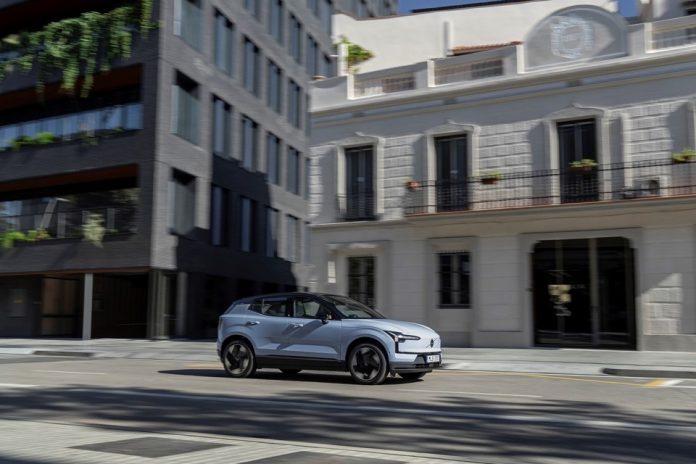
Volvo is expanding its sustainability strategy, setting new ambitious goals for 2030 and 2040. The company is also boosting its focus on biodiversity, and by 2025, the company aims to have 100 per cent of its debt linked to its Green Financing Framework or in a sustainability-linked format.
“Taking actions to combat climate change is non-negotiable and going fully electric is an important step on our pioneering journey,” says Jim Rowan, CEO of Volvo Cars. “As we move to further reduce emissions throughout our value chain, we have a responsibility to do more and address our biodiversity footprint as well as help improve people’s lives. Our updated strategy has been designed to help us do just that.”
Volvo Cars’ new sustainability ambitions for 2030 in short:
- Reduce its CO2 emissions per car by 75 per cent (compared to 2018 levels).
- Reduce energy usage in its operations per average car by 40 per cent (compared to 2018 levels).
- Reach 30 per cent average recycled content across its fleet, with new car models having at least 35 per cent recycled content.
- Reduce water use in its operations by 50 per cent average per car (compared to 2018 levels).
- At least 99 per cent of all waste from its operations to be either reused or recycled.
Since the release of the sustainability strategy in 2019, Volvo Cars has made progress towards its climate action targets. For example, 69 per cent of company operations are now powered by climate-neutral energy compared to 55 per cent in 2019, and 100 per cent climate neutral electricity is now used across its manufacturing plants globally, compared to 80 per cent in 2019. Additionally, Volvo Cars has reduced its CO2 emissions per car by 19 per cent since 2018.
Net zero greenhouse gas emissions by 2040
Volvo Cars’ aim now is to reach net zero greenhouse gas emissions by 2040. This expands upon our previous ambitions of being climate neutral by 2040, and clarifies the company’s intention to use carbon removals only to mitigate any unavoidable emissions. The company’s first priority remains to reduce real emissions before turning to carbon removals, and encourages its suppliers to do the same.
This will be underpinned by an ambition to achieve 100 per cent green debt or sustainability-linked financing of assets by 2025 – in recognition of the fact that finance plays a critical role in advancing sustainable development.
2030 is a milestone year for the company. By then it plans to be a fully electric car company while also aiming to reduce CO2 emissions per average car by 75 per cent compared to its 2018 baseline. The company believes that through a combination of only selling fully electric cars and reducing emissions by 30 per cent from both its supply chain and operations per average car, it will be on track to meet the CO2 reduction goals.
Working towards becoming a circular business by 2040
At Volvo Cars, embracing the circular economy has been in focus since 2019. Recycled material already comprises a larger proportion of materials in newer Volvo cars than ever before. For example, nearly 25 per cent of all aluminium in the Volvo EX30 is recycled while approximately 17 per cent of all steel and plastic in the car comes from recycled sources as well.
Volvo Cars aims to use 30 per cent average recycled content across its fleet by 2030, and for new car models released from 2030 to contain at least 35 per cent recycled content. The company is also striving to ensure that by 2030, 99 per cent of all its waste is either reused or recycled compared to recycling 94 per cent of global production waste in 2022.