
In the new editorial series of interviews, Sustainability in Action – Leaders’ Innovation Impact, Sustainability Today invites leaders in business to participate in an interview celebrating excellence in sustainability leadership across sectors. This editorial initiative recognizes organizations, projects, and individuals who demonstrate outstanding leadership, innovation, and measurable impact in advancing sustainable practices.
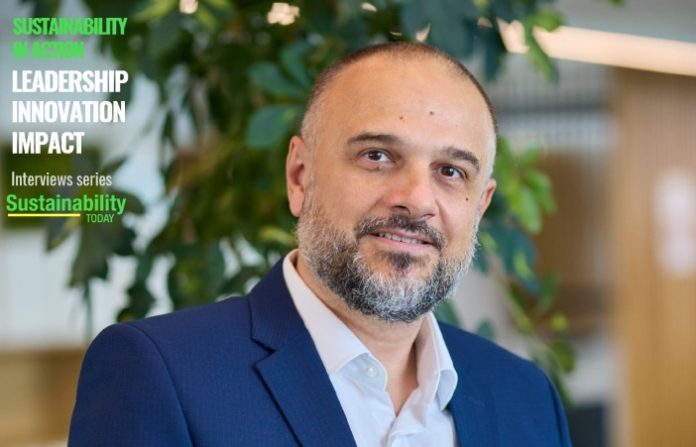
Find below the latest Interview with Ciprian Florescu, Country Holding Officer ABB Romania, detailing on the strategic priorities this year, the breakthrough endeavors, challenges and impact of new technologies and positioning within the market landscape in Romania.
As sustainability priorities continue to evolve, what are the key strategic sustainability goals and leadership priorities for your organization in 2026, and how are they shaping business decisions across the organization ?
To start off, let’s say that I would not be able to talk about what we do at ABB without talking about sustainability. And that is because we are defined by it: our company purpose is to enable a more sustainable and resource-efficient future with our technology leadership in electrification, automation and motion. This shapes the way the company runs operations, develops products, shapes people’s culture and is involved in the community.
Our agenda focuses on three strategic pillars: Enabling a Low-Carbon Society, Preserving Resources and Promoting Social Progress.
We are committed to reaching net zero by 2050. By 2030 we will cut our own emissions by at least 80%. Our goal is not just to reduce our own footprint. At ABB, sustainability is about helping industries outrun – leaner and cleaner. This is our value proposition for our customers. We aim to help our customers avoid 600 million tons of CO2 equivalent emissions through the lifetime of the products we sell. Industries need to perform better while using less energy and fewer resources and we are perfectly positioned to support them with our portfolio.
At the same time we work to decarbonize our products through a commitment to circularity: designing products for full lifecycle, using recycled content and targeting zero waste to landfill by 2030.
Sustainability is a core value for us and we believe in leading by example. That’s why, in 2023, we transitioned our entire company fleet in Romania to electric vehicles. At that time, only a limited number of organizations had made such a commitment, making us one of the pioneers in this area. We continue to benefit from ABB’s charging solutions installed throughout Romania, which provide the infrastructure needed to support our fully electric fleet and reinforce our sustainability goals.
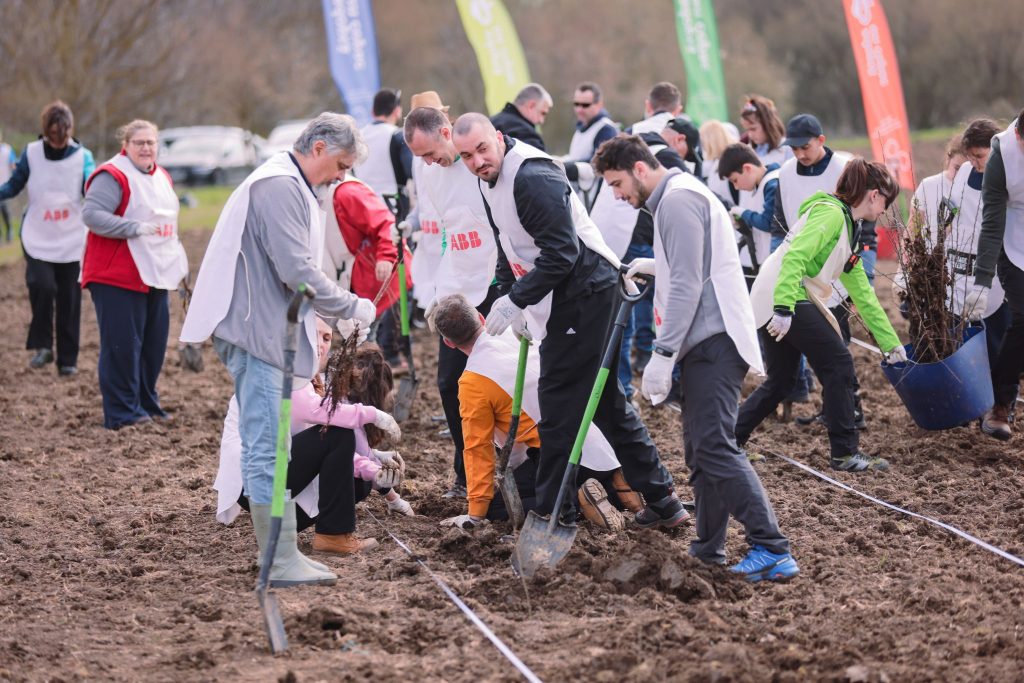
We are also committed in social progress: women in senior management roles reached 22.6% globally; and 50% locally. We are involved in the community by supporting technical education – we contribute to the growth of future specialists by providing modern equipment for their practical training. We have developed partnerships with several universities in Romania and have equipped the laboratories of faculties of Energetics in Bucharest, Cluj-Napoca, Oradea, Târgu-Mureș. We believe that technology creates value if people can grow with it. We are also very much involved in corporate responsibility environment – related volunteering activities. In April we joined forces in Valea Dragului, Giurgiu County and planted over 300 trees, which is a meaningful step toward supporting biodiversity and combating climate change. Our goal is to continue in this direction in the second part of the year, planting even more trees.
Can you share some of the sustainability projects and initiatives that best demonstrate innovation within your organization ? What challenge was it designed to address, and what measurable environmental and social impacts has it achieved?
Sustainability and innovation are inseparable in our times, because solutions and long-term results come from rethinking the old ways in which we used to operate as businesses and as societies. They are inseparable especially in our activity at ABB, where we aim to help industries outperform, or how we like to say it: outrun – leaner and cleaner. Leaner is about improving productivity and efficiency of every industry’s critical day-to-day operation, through our leading automation technologies. And cleaner is achieved through our leading electrification technologies that help decarbonize the world’s most essential industries.
Electrification: ABB delivered to its customers in Romania the GSec Air Switch Disconnector that combines proven performance with sustainability, using dry air insulation to eliminate greenhouse-gas emissions associated with SF₆-based switchgear.
Speaking about e-Mobility, ABB supplied a large number of charging stations for electric vehicles across Romania, including solutions for charging electric buses.
Automation: ABB strengthened its marine automation offering through the acquisition of Høglund, which operates in Norway, Poland, Romania, and China. Through this acquisition will be further optimized vessels’ automation, monitoring, and control to enhance safety, energy efficiency, and operational performance.
Motion: In 2024, ABB supplied the complete traction chain for the modernization of 19 locomotives operated by Romania’s national passenger rail operator, CFR Călători. Delivered in partnership with local contractor Reloc, the solution included transformers, converters, and electric motors to improve locomotive performance and efficiency.
In addition we implement preventive maintenance projects for the cement industry and wind turbine generator retrofit projects for the energy sector, supporting sustainability through equipment life extension and the adoption of circular economy principles.
In the petrochemical industry, we deliver energy efficiency and power quality improvement solutions that help reduce energy consumption, lower network pollution, and contribute to more sustainable industrial operations.
How do you ensure that sustainability objectives are integrated into core business operations, governance, and long-term value creation rather than remaining standalone initiatives?
In just a few words, it’s a matter of how we approach sustainability at ABB – not as a parallel initiative to our activity, but as our company’s reason to be.
Led by our company purpose, we design our products as solutions for global sustainability challenges, with decarbonization and resource efficiency in mind. They create value both for our company and our customers.
Our sustainability agenda highlights science-based, trackable commitments, and the progress is reported annually and validated through globally recognized ESG rating frameworks. Speaking of performance, our 2025 global Sustainability Statement highlights key results: a reduction of 79 percent in our scope 1 and 2 GHG emissions compared to 2019, while Scope 3 emissions, which depend on the progress of the grid decarbonization, have decreased by 1 percent compared to the baseline year of 2022. The products we sold to customers in 2025 helped them avoid 80 megatons of emissions and 285 megatons cumulatively since 2022, considering the full life cycle of the products.
When it comes to governance, having sustainability at the heart of our business means that the ultimate responsibility for the company’s Sustainability Agenda, targets and annual Sustainability Statement lies at the highest level: with the entire Board of Directors. Ultimately, it is the culture of integrity and transparency that we aim to embed across the value chain. At ABB, it’s not just about what we do – but how we do it – to provide value to businesses, communities, our customers and stakeholders around the world. We see integrity as part of our license to operate, and we are committed to the highest standards of ethical business conduct and professional behavior.
Effective communication is essential for driving engagement and accountability. How does your organization communicate sustainability performance and impact to stakeholders, and what approaches have proven most effective in building trust and transparency?
One very important tool that proves transparency, commitment to our sustainability agenda and that creates trust with our stakeholders is the global Sustainability Statement, published annually. We further communicate the progress reported in this statement in every engagement we have with our stakeholders locally, at every level. Whether at industry events, conference panels that our division leaders attend, meetings between our sales teams and our customers. It’s not just one department’s or one person’s job – it’s fundamental to how we present ourselves.
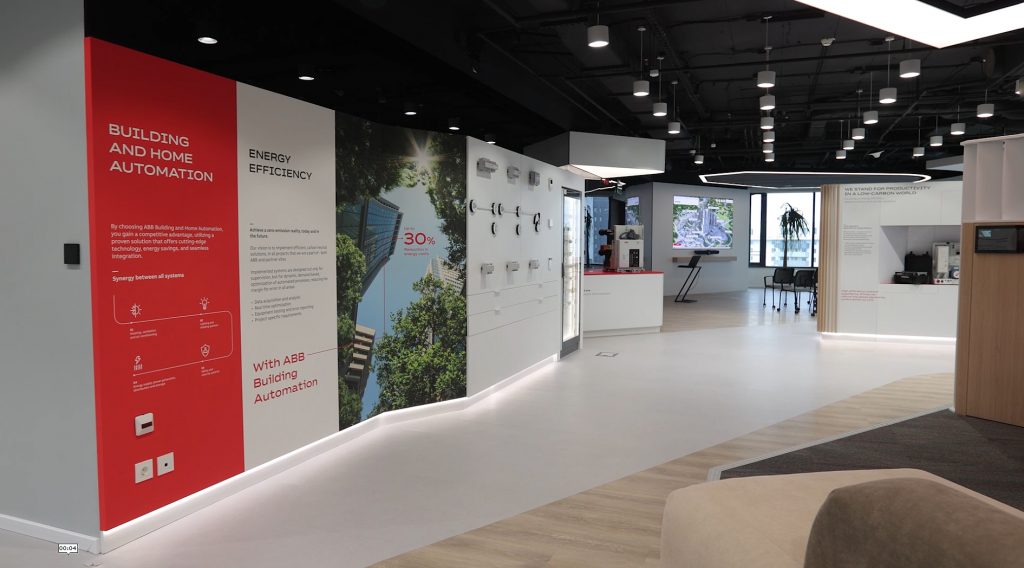
We also engage with stakeholders along the value chain to drive sustainability topics such as decarbonization and social progress. The perspectives of our stakeholder groups are reflected in our policies and procedures and aim also to co-develop solutions with our key audiences. Beyond reports, I believe experimenting with our solutions is the best way to understand our approach and build trust in our technology and results. This was also the vision behind our new Customer Experience Center, which we opened at the end of last year in our Bucharest head office. The center highlights ABB’s expertise in electrification, automation, electric drives and E-mobility, showcasing technologies that can reduce energy consumption and costs, supporting sustainability goals. It is a place for live demonstrations, product presentations, and digital tools that illustrate how ABB solutions work together. We find this as a very compelling approach to communicating our how we contribute to a more sustainable future.
What is the role of technology, digital solutions, and artificial intelligence in advancing your sustainability strategy, improving decision-making, or enhancing the measurement and management of sustainability performance?
In our operations, they work together to make sustainability performance possible for our company and for the industries we help in their transformation. They do so by improving the ability to extract insights, analyze, measure what was previously difficult to measure, thus making better decisions in line with the sustainability agenda. Relevant insights and enhanced measurement support us in developing the right solutions for each challenge.
Technology, digitalization and AI are great opportunities on the journey towards a more sustainable and resource-efficient future. However, we do believe that investing in both people and technology is the answer for the future as we see it: humans and technology working together. Our efforts also go into continuous learning and re-skilling for our people, as well as partnerships with universities and technical institutions, which contribute to building the pipeline of talent that industry will need in the next decade.
Looking ahead, what emerging sustainability trends, innovations, or technologies do you believe will have the greatest influence on organizations seeking to create meaningful environmental and social impact over the next few years?
By engaging with our various stakeholders, we identify and anticipate emerging trends, shifting customer needs and changing market expectations. Energy transition to electrification, energy security, resilience and efficiency, industrial decarbonization, circularity are key drivers for sustainability progression in multiple sectors, as well as technological innovation and digital transformation. Energy Data analytics tools that support better insights into resource consumption and optimization are one of the trends that will continue to shape the future and be integrated into sustainability strategies.
Looking beyond trends, what I believe will weigh most in the next years is a mindset shift of companies’ approach on sustainability – from compliance prerequisite to a value driver. In my view, action – translated through innovations – happens at the intersection of awareness, responsibility and ability to turn challenges into opportunities.