

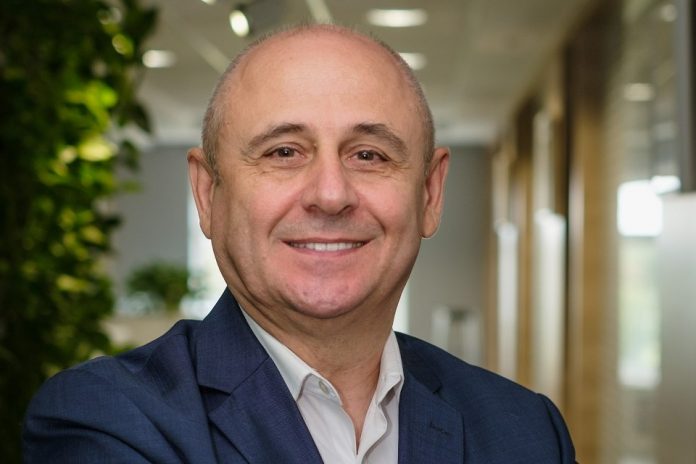
“Circular economy is an economic model that normally creates a zero-waste economy. We are talking about managing resources captured at the end of their life cycle. A circular economy model does not end with collection.
We must go beyond collection performance and understand that the activity of RetuRO and of other operators in the field is also linked to the global economy. RetuRO and the other stakeholders must work as a perfect team, to form a team of champions,” stated Constantin Damov, President of Green Group, during the “2 Years of DRS in Romania” conference organized by ECOTECA and the Ministry of Environment.
“We must be very careful about the kind of circular economy we create with RetuRO at the center. There are economies with a short radius of action and economies with a long radius of action.
We need to figure out how to ensure that all these resources support those who have invested here—namely, the producers in Romania. We must assess the costs at the level of local authorities. Have they decreased or not? What is the carbon footprint compared to the pre-DRS period? There are many aspects to analyze.
I want RetuRO to be an epicenter that spreads the circular economy model throughout the region, and not one that creates fractures in the economy. We must ensure that any legislation concerning RetuRO is well-designed, incentive-driven, and does not obstruct competitiveness in this market. I hope that in the next two years RetuRO will become an exportable model for the Balkan countries.”