

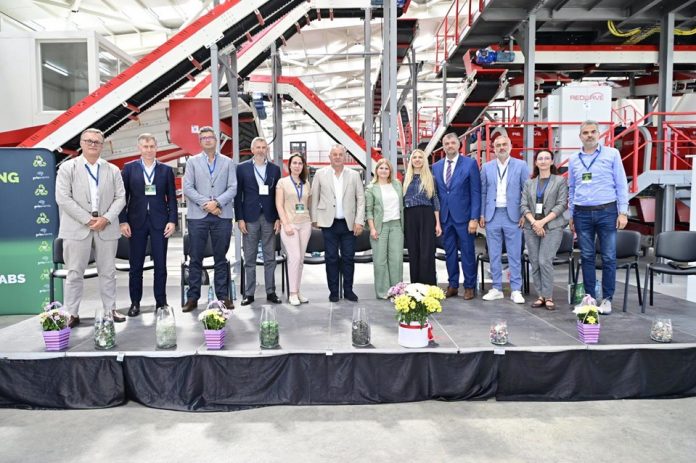
A glass recycling plant with an annual processing capacity of 80,000 tonnes has been inaugurated in Buzău, following an investment of approximately 7.4 million euros. The facility is one of the largest recent investments in glass recycling in Romania and Southeastern Europe.
According to investor ABS 2000, the project represents a major milestone for the region’s circular economy infrastructure and significantly expands Romania’s capacity to recycle post-consumer glass.
The new facility processes post-consumer glass and transforms it into high-quality secondary raw material that can be reintroduced into the economic cycle and used by industry. With a capacity of up to 80,000 tonnes per year, the plant is designed to support the recovery of significant volumes of post-consumer glass and strengthen the circular chain linking collection, sorting, processing and the production of new packaging.
“The factory inaugurated by ABS 2000 in Buzău adds 80,000 tonnes of annual processing capacity at a time when the circular economy is moving from objectives and strategies to concrete industrial investments,” the company said in a press release.
The facility was developed with support from Romania’s National Recovery and Resilience Plan (PNRR), through the Environmental Fund Administration.
“This investment means much more than a new factory. It means industrial capacity built for the future of the circular economy. Through the 80,000 tonnes of glass that can be processed annually, we are creating the conditions to recover, on a significantly larger scale, a resource that must remain in the economy. We need infrastructure, technology and strong partnerships to make recycling work efficiently. This is the direction in which we are investing and in which we believe,” said Serghei Balica, CEO of ABS 2000 Buzău.
The investment is expected to contribute to the expansion of Romania’s glass recycling capacity, the strengthening of circular economy infrastructure and the production of high-quality secondary raw materials from post-consumer glass.
It is also expected to reduce the amount of glass waste sent to landfill and increase regional cooperation between Romania, the Republic of Moldova and Bulgaria.