

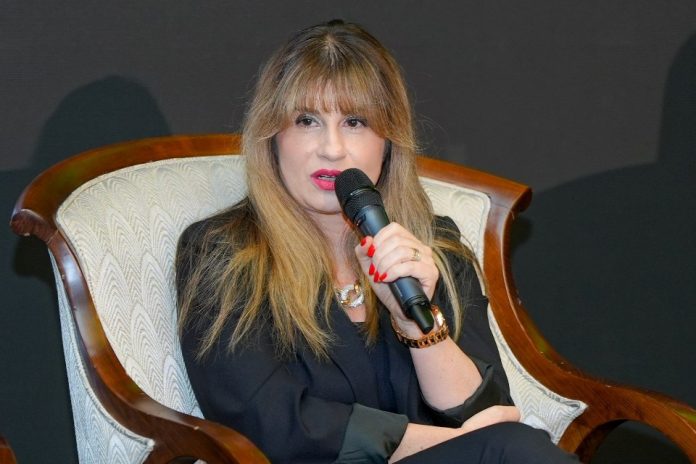
The European Green Deal should be viewed as an economic strategy designed to strengthen Europe’s competitiveness, resilience and resource efficiency, rather than solely as a climate policy, Mihaela Croitoru, CEO of Sustainability Lens, said at the Sustainability in Business Forum, organised by Sustainability Today and The Diplomat-Bucharest.
Speaking at the event, Croitoru argued that sustainability should be understood as a strategic tool for helping businesses adapt to economic and environmental changes, develop competitive advantages and prepare for a transforming global economy.
“The European Green Deal is a growth strategy aimed at transforming the European economy into a modern, competitive and resource-efficient one. Climate neutrality is the means through which the European Commission intends to achieve this commitment,” Croitoru said.
She stressed that the transition towards climate neutrality should ultimately enable Europe to build an economy that is less dependent on natural resource consumption while remaining competitive internationally.
“When our economy and our continent become climate-neutral, we should be able to speak about a modern, efficient economy that is decoupled from the consumption of natural resources. This means that sustainability is not just about the environment or climate change. It is about adaptation, resilience and competitiveness,” she said.
Croitoru called on businesses to move beyond viewing sustainability primarily as a compliance obligation and instead integrate it into their long-term business strategies.
Referring to discussions about the potential of the circular economy to strengthen industrial competitiveness, she said that similar thinking should be applied across sectors, including energy and manufacturing.
“I believe it is time we finally looked at sustainability for what it really is: a tool for becoming more competitive in an economy undergoing transition,” she said.
Croitoru argued that the European Green Deal reflects an economic rationale, as businesses and governments must prepare for structural changes driven by climate change and the transformation of global markets.
“Why did the European Commission make this commitment and develop this strategy? Not because Europeans are the best people on Earth or because we are the only ones who want to breathe clean air. The reasoning behind this strategy is primarily economic,” she said.
“The economy is clearly going to change, and the conditions in which we operate and live will change as a result of climate change. Europe needs to prepare for this transformation.”
According to Croitoru, Europe’s ambition should be to strengthen its global position through the development of alternative technologies, competitive products and industrial solutions capable of competing with those developed in other major economies.
However, she noted that European products and technologies are not yet sufficiently competitive in all areas, making targeted industrial support essential to the transition.
“Europe wants to become a global leader through the development of alternative technologies and competitive products, alongside other solutions that can help us compete economically with the rest of the world,” Croitoru said.
She added that industry needs clear strategic direction, practical assistance and effective measures to support decarbonisation.
“Industry needs direction, it needs help, and it needs measures that will enable it to decarbonise. We need support measures for industry,” she said.
Croitoru’s remarks highlighted the importance of aligning sustainability objectives with industrial development and economic policy, ensuring that companies can reduce their environmental impact without undermining their ability to compete internationally.