

Romania’s paper and board industry is facing growing pressure from energy costs, access to recycled raw materials and import competition. ROMPAP – the Romanian Pulp and Paper Industry Association, which brings together 19 members with combined annual revenues of more than 1 billion euros and approximately 5,000 employees – is calling on authorities to take measures to safeguard production and investment in Romania.
In the first half of 2026, the corrugated board market grew by approximately 0.5% to 235,192 tonnes, while domestic production of paper used for corrugated board fell by more than 6% to 240,277 tonnes.
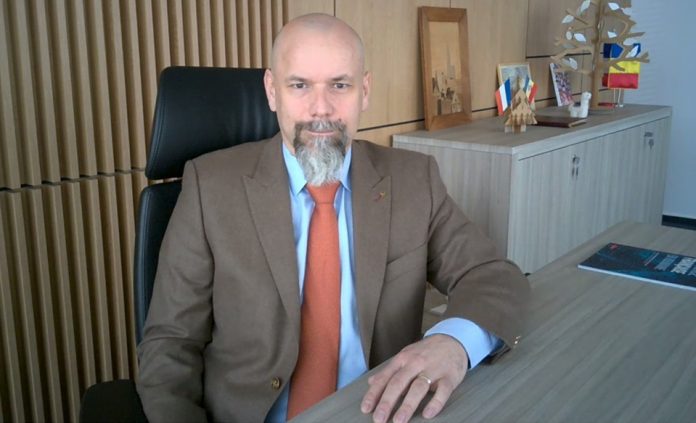
“Demand for packaging is stabilising, while Romanian production is losing ground. Romania risks becoming increasingly dependent on imports in a sector where it has industrial capacity and a significant source of recycled raw materials,” said Paul-Henri Kohler, President of ROMPAP.
Energy Costs Undermine Competitiveness
Energy accounts for approximately 25–30% of paper production costs and can reach as much as 35%. Price volatility is directly affecting both production and investment decisions.
ROMPAP is calling for:
- the rapid implementation of a CISAF electricity support scheme;
- an increase from 15% to 25% in the share of ETS revenues allocated to compensate indirect costs;
- a transitional mechanism to stabilise gas costs.
“We are not asking for preferential treatment, but for competitive conditions comparable to those of our European competitors. Energy competitiveness is essential for production, investment and the security of supply chains,” said Paul-Henri Kohler.
At the same time, approximately 94% of the raw material used to produce paper for corrugated board comes from recovered paper and cardboard, while more than 30% of the quantities collected in Romania are exported. Exports of recovered paper increased from approximately 169,000 tonnes in 2022 to 250,000 tonnes in 2025.
ROMPAP is therefore calling for mechanisms to prioritise the domestic use of recovered paper and allow exports to non-EU countries to be controlled when the needs of the domestic industry are not being met.
From Collection to Effective Recycling
More than 95% of the fibre used in Romania’s paper production for corrugated board is recycled. However, ROMPAP argues that public policies should focus not only on collection, but also on actual recycling within Romania.
ROMPAP is proposing:
- including paper and cardboard in pre-emption mechanisms;
- providing incentives for the use of recycled content;
- introducing bonuses for quantities actually recycled in Romania.
More Than €200 Million Invested
Over the past two to three years, the industry has invested more than €200 million, including in energy efficiency, renewable energy, biogas and emissions reduction.
“The industry has demonstrated that it is willing to invest and transform. However, for these investments to continue, we need a competitive and predictable economic environment,” said Paul-Henri Kohler.
ROMPAP is calling for a partnership between industry and the authorities focused on three priority areas:
- Competitive and predictable energy – rapid measures for energy-intensive industries and lower cost volatility.
- Keeping raw materials within Romania’s circular economy – ensuring local industry has access to recovered paper collected in Romania.
- Encouraging effective recycling – moving from simple collection to recycling within Romania and rewarding the use of recycled content.
“Romania has the resources, industrial capacity and know-how. We need a competitive and predictable framework so that added value remains in the country, alongside fair competitive conditions, access to resources and policies that encourage production, recycling and investment in Romania,” Paul-Henri Kohler concluded.