

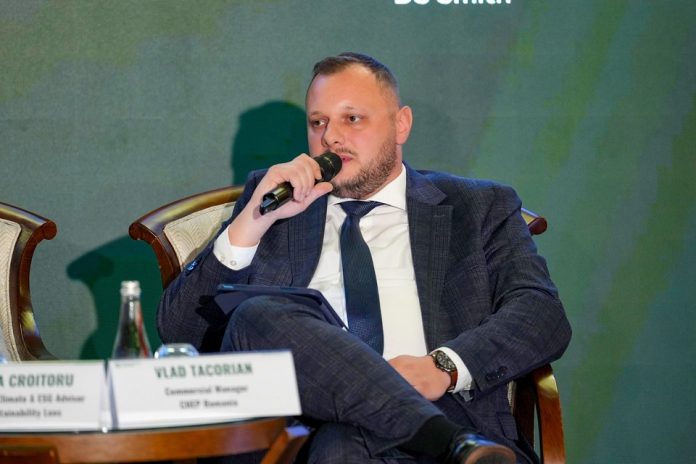
The circular business model implemented by CHEP globally and in Romania is designed to address both operational efficiency and sustainability challenges, Vlad Tacorian, Commercial Manager of CHEP Romania said during Circular Economy Conference organized by The Diplomat-Bucharest and Sustainability Today.
“At its core, our model is circular. Running a circular business today doesn’t just mean owning assets — it also means managing all related services, including collection, repair, and, very importantly, traceability.”
He noted that Romanian producers are currently facing pressure from multiple directions, including rising transportation costs, labor shortages, fluctuating demand, and increasing expectations from retailers for reliable service, cost control, and alignment with sustainability goals.
Key statements:
- “We respond directly to these challenges, first through the standardization of the pallets we provide. They are widely accepted in modern retail and help reduce refusals, delays, or penalties at delivery.”
- “From a logistics standpoint, we eliminate the need for investment in pallet purchasing and storage. We cover repair costs, losses, and manage the entire return process that customers currently handle themselves. At the same time, we offer a clear per-rotation cost that is easy to budget and integrate into product pricing.”
- “We also support clients with seasonal activity by ensuring constant access to pallets, independent of fluctuations in the timber market or peak periods. These issues are critical, especially in a labor-constrained market, as they place additional pressure on the workforce.”
- “In terms of sustainability objectives, our circular model — based on reuse and shared pallet systems — generates less waste, a lower carbon footprint, and concrete data that can be easily integrated into customers’ sustainability reports. We are convinced that sustainability is a competitive advantage rather than a financial burden.”